
Knowing about someone else’s budgeting system is something that interests me a lot. I like that more and more people are sharing how they handle their finances (I get my fill on YouTube). It’s super interesting to learn kung ano yung pinag-iipunan nila, what they splurge on, their money rules, or what they refuse to give up kahit tag-tipid. Kung favourite hobby nyo rin ang maki-chismis sa money habits ng iba, this post is another one of those that will hopefully satisfy that curiosity.
My money system
I wouldn’t be able to share our monthly expenses if I didn’t have a system in place. As the CFO of our household, this is how I do it:
Switching to cashless
I want to start with how we pay for our spending, and that is almost exclusively with credit cards. We use them for everything (unless they don’t accept cards, then we have to deal with the hassle of making a withdrawal). It’s easy to go cashless here in Canada, and that’s why we don’t carry cash at all. If someone owes us $50 and they pay us in cash, it goes straight to the bank. For us, it’s always either credit cards or online money transfers. Super convenient.
Meron akong mga kilala na preferred pa rin nila ang cash or debit cards kasi natatakot daw sila. Wala raw silang tiwala sa sarili nila pag may credit card sila (Exhibit A: Mama). They’re worried that they might go overboard, and that’s understandable. Since we haven’t missed a single due date after using credit cards for more than a decade, we trust ourselves with one (or to be more specific, five).
One of the reasons I love credit cards so much is that it helps with travel. Last year, when my lola got sick, my instinct was to fly to the Philippines as soon as possible. Flights from Canada to PH are so expensive. But since we’d been earning those travel rewards points for some time, I was able to book that ticket without worrying about money. I am grateful that I got to take care of our lola and be with her before she passed. And that is priceless (literally and figuratively).
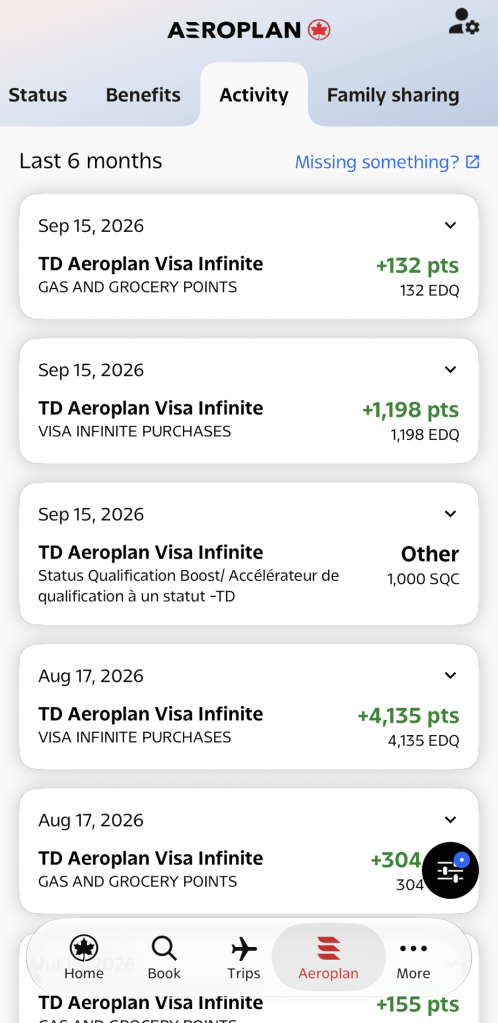
A quick rundown of our five credit cards:
| Amex Cobalt | Our primary card and the only credit card we’re willing to pay annual fees for. |
| Neo World Mastercard (a cashback card) | Our Costco card since Costco only takes Mastercard. Plus not all merchants accept Amex, so this is our backup wherever Amex isn’t accepted. |
| RBC ION Visa | Our very first credit card in Canada. We barely use it now except for Doordash’s RBC promos where we can save on delivery and service fees. |
| TD Rewards Visa | Our old primary card. It will be inactive from now on and will serve as a backup card. |
| Amazon Rewards Mastercard | Our old Amazon and Costco card but Neo’s cashback is better. Another backup card. |
So even if we have five cards, we pretty much just use two.
Tracking routine
Money Lover is the name of the expense tracking app I use. I love it so much that I purchased the premium version (thankfully it’s only a one-time payment and not a monthly subscription). This is where I log everything—as in everything—down to the very last cent. I spend a couple of minutes every day to keep it updated.
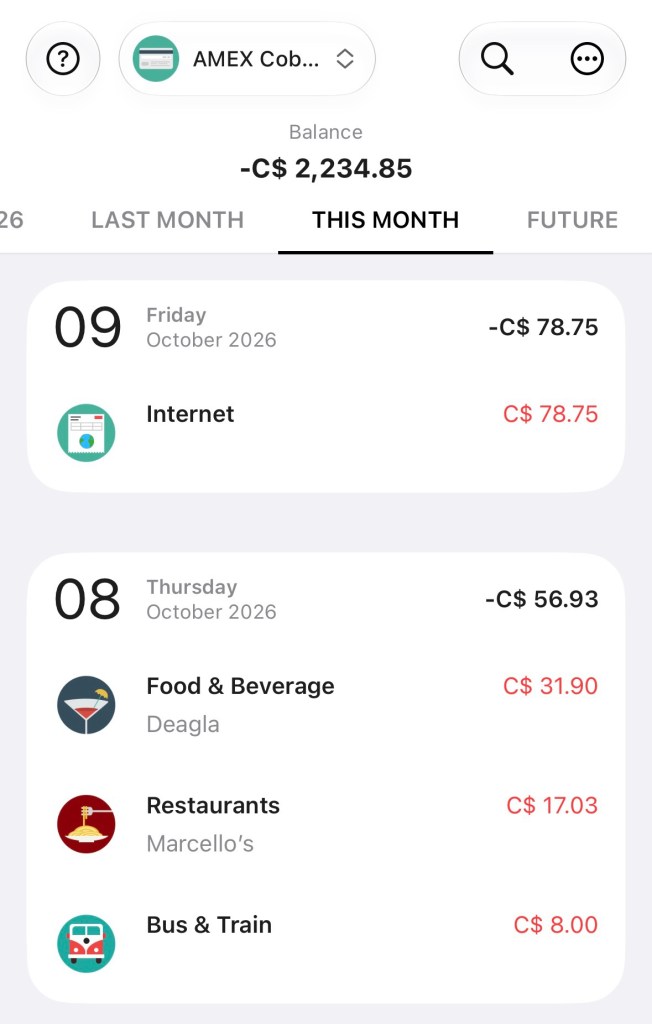
Every payday, the money gets split into different money buckets: our bills, daily expenses, emergency fund, investments, gifts, cat supplies (I have a lot of buckets), travel fund, fun money, cat sitter fund, car maintenance fund, basement fund, family visits fund, etc. Everything happens in the app. If I look at our bank account, it’s just one lump sum. But in the app, every dollar is already accounted for.
Monthly check-in
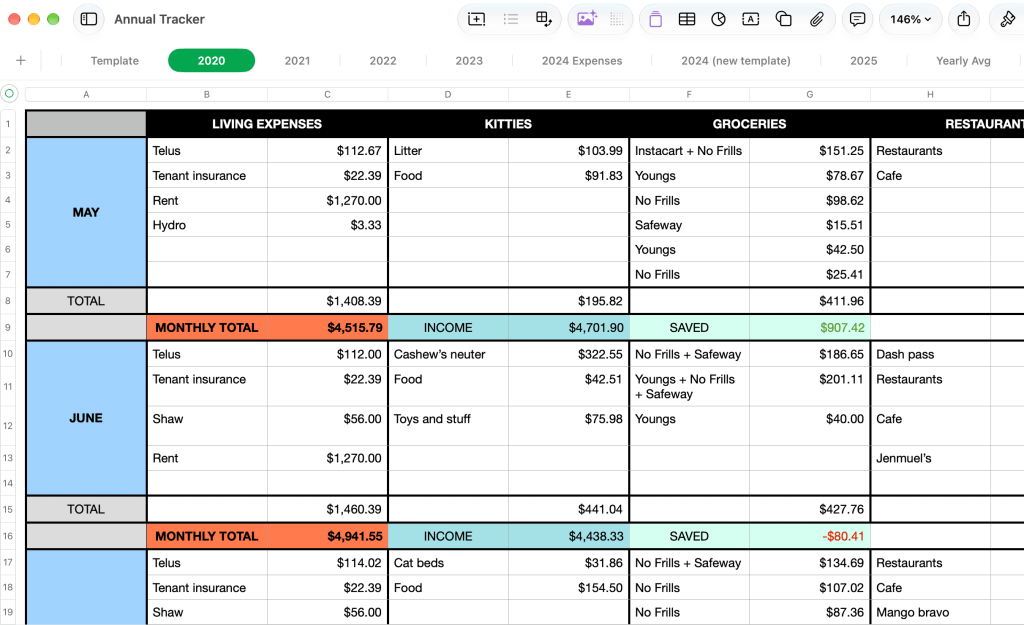
One of my favourite end-of-month rituals is running our numbers. This is where I switch to my spreadsheets to manually log the data from the app and lump them into categories on the spreadsheet. I get to see how much we spent in each category and compare it to previous months. Did we do well this month? What can we improve on? Which categories are we struggling to rein in? How close (or far) are we to our emergency fund goal? Were we able to save and invest as much as we hoped? Being able to see these things brings me clarity and so much satisfaction—or anxiety, depending on the month.
The yearly review
This is where my diligence pays off! After consistently tracking our expenses in the app and moving them over to the spreadsheet every month, I am rewarded with a complete yearly overview of our finances. The tracker also includes whatever money comes in and automatically calculates our savings rate, monthly averages, and the percentage breakdowns to see how much each category eats into our income.
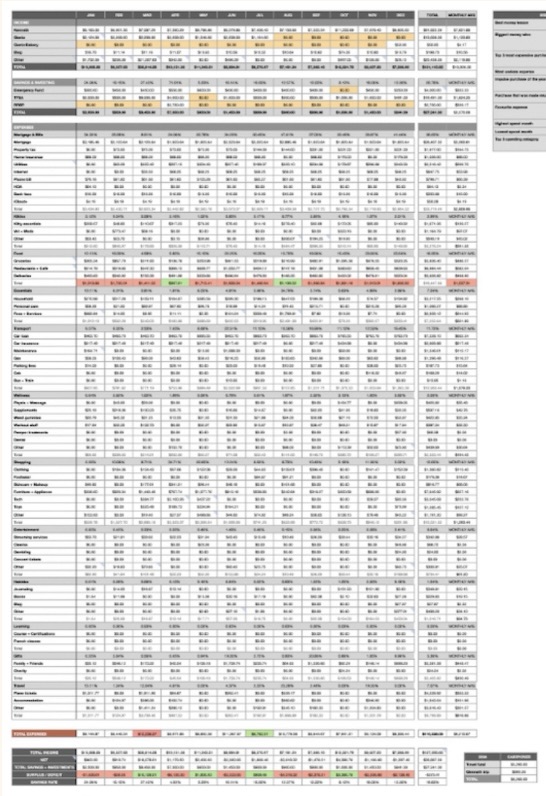
Over time, I’ve refined my spreadsheet to get more information and clarity when it comes to our big financial picture.
And that’s my system! I’ve been tracking our expenses for over a decade now (though the yearly spreadsheet addition is only about 6 years old), and anyone who knows me can tell you that this has become a bit of an obsession. But I’d like to believe it’s a useful one! If you’re someone who needs a money system, I hope my obsession becomes useful to you too.
And since I didn’t realize sharing how I track our finances would get this long, I’ll save our monthly breakdown—with real numbers—for the next post. Meanwhile, if you’re willing to be a paid subscriber, I have all my other money diaries posts for your reading pleasure.
- What I Spend in a Week series
- Quarterly Expenses
- and other Money Diaries posts
I also write about some life updates, small and big things that made me happy, my ongoing attempts at being healthy and active, and other random stuff. You can subscribe below. I love writing them 🩶


Leave a Reply